
Project Overview
Client Industry: Jewellery & Precious Metals
Business Type: UK-based E-commerce Store
SEO Focus: Subdomain SEO Optimization
Campaign Duration: 4 Months
Goal: Increase organic traffic, improve rankings, and grow search visibility for transactional keywords.
The client approached VP DigiWeb with a major challenge. Their ecommerce shop was hosted on a subdomain, which limited organic growth potential and made SEO scalability difficult. The website had weak keyword visibility, inconsistent internal linking, technical SEO issues, and low engagement from organic search users.
The objective was clear:
- Improve search engine visibility
- Increase daily organic clicks
- Optimize the ecommerce subdomain structure
- Build topical authority around jewellery-related searches
- Improve conversion-focused user experience
The SEO campaign focused on combining technical SEO, content optimization, entity relevance, and topical authority strategies to improve long-term organic performance.
The original inspiration and structure approach were based on an earlier jewellery SEO project published by Vicky Patel.
Initial SEO Challenges
When the project started, the website faced several SEO issues that were limiting organic growth.
1. Weak Subdomain Authority
Google often treats subdomains separately from root domains, requiring stronger standalone authority building and internal linking strategies. Industry discussions and SEO case studies frequently highlight this challenge.
The ecommerce store lacked:
- Strong internal authority flow
- Topic clustering
- Supporting informational content
- Proper category optimization
2. Technical SEO Problems
The audit identified:
- Duplicate meta tags
- Thin category pages
- Poor crawl depth
- Unoptimized product URLs
- Missing schema markup
- Slow-loading pages
- Weak mobile UX
Technical SEO issues were preventing efficient crawling and indexing.
3. Poor Keyword Targeting
Most pages targeted broad, highly competitive keywords without matching user search intent.
The website lacked:
- Long-tail keyword targeting
- Transactional intent optimization
- Localized keyword opportunities
- Informational support content
4. Low Internal Linking Strength
Important product and category pages received minimal internal links, reducing crawl priority and topical relevance.
This is a common issue identified in successful ecommerce SEO recoveries and topical authority campaigns.
SEO Strategy Implemented by VP DigiWeb
The SEO strategy focused on creating a strong topical ecosystem around jewellery-related search intent while improving technical foundations.
1. Advanced Keyword Research & Intent Mapping
The first phase involved identifying:
- Commercial keywords
- Transactional keywords
- Informational queries
- Long-tail search opportunities
- High-conversion intent searches
Keywords were mapped carefully across:
- Category pages
- Product pages
- Collection pages
- Blog content
- FAQs
- Supporting informational content
This reduced keyword cannibalization and improved semantic relevance.
2. Ecommerce Technical SEO Optimization
A complete technical audit was performed.
Key improvements included:
- Resolving crawl errors
- Fixing broken internal links
- Improving Core Web Vitals
- Optimizing XML sitemaps
- Improving robots.txt structure
- Canonical optimization
- Mobile responsiveness improvements
- Image optimization
- Schema markup implementation
Structured data implementation helped search engines better understand products, categories, and business entities.
3. Topical Authority Content Strategy
Instead of targeting isolated keywords, the campaign focused on building topical authority.
We created content clusters around:
- Gold investment
- Jewellery buying guides
- Precious metals
- Gold price trends
- Wedding jewellery
- Luxury jewellery
- Jewellery care
- Product comparison content
Modern SEO increasingly rewards semantic depth and topical coverage instead of isolated keyword optimization.
4. Internal Linking Architecture Optimization
One of the biggest growth drivers was rebuilding the internal linking structure.
We implemented:
- Contextual internal links
- Category-to-product linking
- Blog-to-category authority flow
- Breadcrumb optimization
- Related products strategy
- Topic cluster linking
This improved:
- Crawl efficiency
- Page authority distribution
- User navigation
- Session duration
5. On-Page SEO Optimization
Every important page was optimized for:
- Search intent alignment
- Semantic keyword relevance
- Meta titles
- Meta descriptions
- Header structure
- Product descriptions
- Image alt text
- Entity optimization
Pages were rewritten to improve both rankings and conversion quality.
6. User Experience & Conversion Optimization
SEO performance improves when user engagement improves.
UX improvements included:
- Cleaner navigation
- Faster mobile experience
- Better product categorization
- Improved filtering
- Simplified checkout paths
- Improved trust signals
- Better CTA positioning
This helped improve:
- Engagement metrics
- Conversion rates
- User retention
- Organic interaction quality
SEO Results Achieved
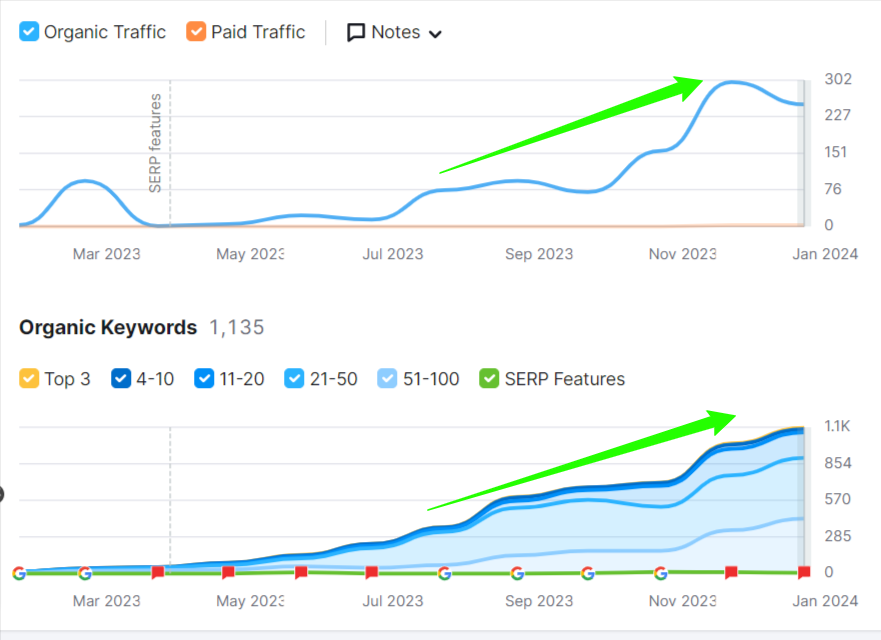
Within 4 months, the ecommerce subdomain experienced significant organic growth.
Growth Highlights
- Daily organic clicks increased substantially
- Higher rankings for commercial jewellery keywords
- Improved Google indexing
- Increased keyword visibility
- Better crawl efficiency
- Stronger category page rankings
- Improved user engagement metrics
The website began ranking for both informational and transactional search terms, strengthening overall domain authority.
The SEO campaign successfully transformed the subdomain into a stronger standalone organic asset.
Why the Campaign Worked
The success came from combining multiple SEO disciplines instead of focusing only on rankings.
The strategy integrated:
- Technical SEO
- Semantic SEO
- Internal linking
- Topical authority
- UX optimization
- Conversion optimization
- Content strategy
- Search intent mapping
This holistic SEO approach aligns with modern search engine algorithms focused on expertise, authority, trust, and user satisfaction.
Key SEO Takeaways for Ecommerce Businesses
1. Subdomains Need Dedicated SEO Strategy
Subdomains require:
- Strong internal linking
- Separate authority building
- Topic clustering
- Consistent optimization
2. Topical Authority Matters More Than Isolated Keywords
Modern SEO rewards businesses that comprehensively cover a topic.
Building clusters around related search intent improves rankings across multiple keywords.
3. Internal Linking Is a Major Ranking Lever
Strategic internal linking helps search engines understand:
- Topic relationships
- Important pages
- Site structure
- Authority flow
4. Technical SEO Creates the Foundation
Without proper crawlability and indexing, content alone cannot maximize SEO performance.
5. UX and SEO Work Together
Better user experiences improve:
- Engagement
- Conversion rates
- Click-through rates
- Search performance
Final Thoughts
This ecommerce SEO campaign demonstrates how a structured, intent-focused SEO strategy can significantly improve organic performance even for subdomain-based websites.
By combining:
- Technical SEO
- Content optimization
- Semantic relevance
- Topical authority
- Internal linking
- UX improvements
VP DigiWeb helped transform the website into a stronger organic growth asset capable of competing in a highly competitive jewellery market.
Businesses that invest in long-term SEO foundations rather than short-term ranking tactics are far more likely to achieve sustainable organic growth and higher search visibility over time.
Inspired by earlier SEO case study structures and modern topical authority strategies.
Reviewed by: Vicky Patel – SEO Specialist & Founder of VP DigiWeb with 9+ years of experience in SEO and digital marketing.